Timber Frame vs Block Building
With the growing popularity of timber frame in the UK housebuilding – reflected in its ever-growing presence in our order bank – Head of Timber Frame, Sandeep Channa shares her expertise on the key benefits and compares it to traditional block building:
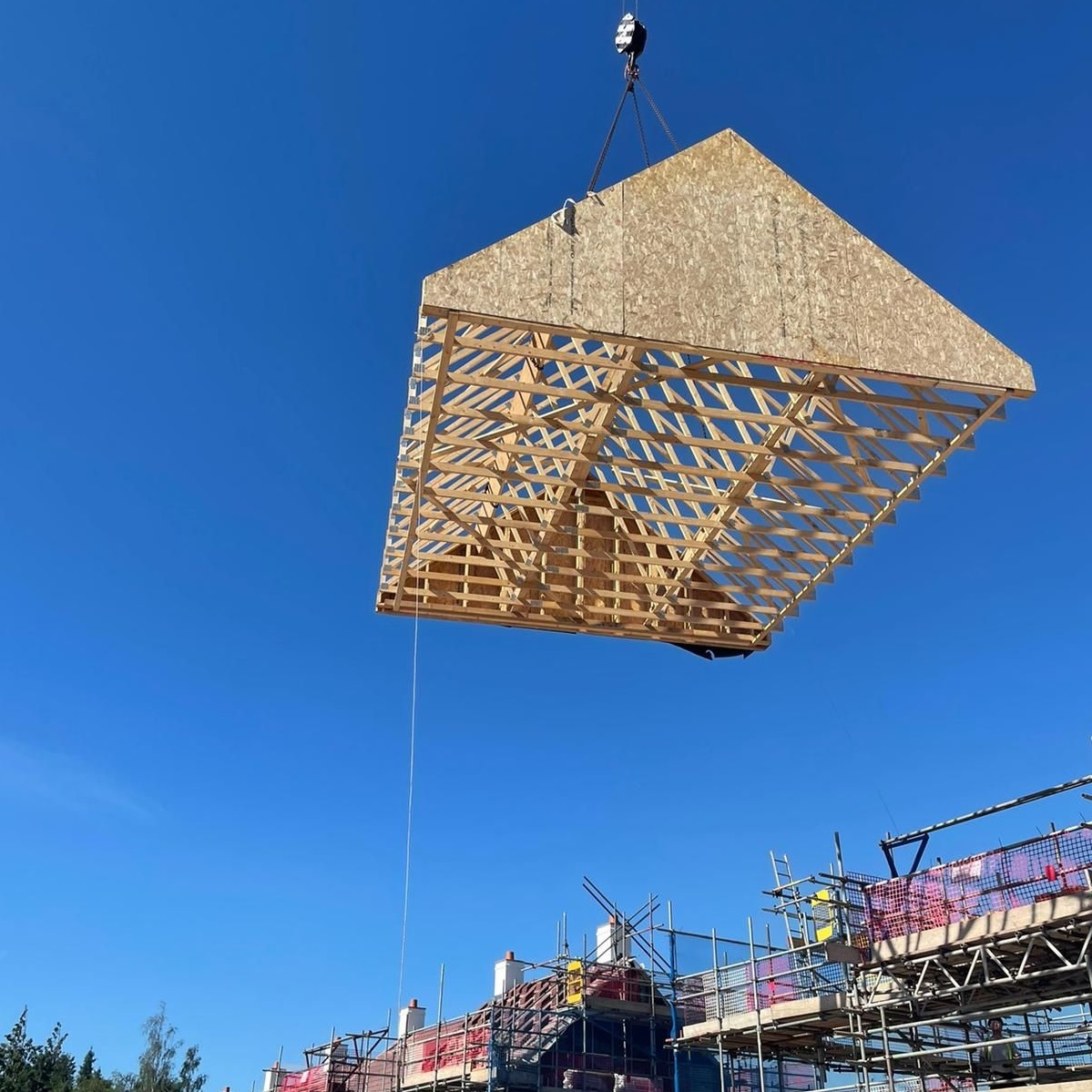
- Build time is quicker – Timber frame is a far quicker build method than traditional brick and block because the timber frame, panels and roof trusses are all manufactured and partially assembled off-site while foundations and utilities groundwork is laid. Once delivered to site, depending on the size and design, it can be structurally complete within a week to ten days. Building with brick and block build time extends by weeks. On a timber frame build, tradespeople are usually at the finishing stages before the equivalent brick-built home is even weathertight.
- Build accuracy – Timber frame is an engineered product meaning the entire structure is calculated, engineered, and cut and assembled in a factory environment by a team that works together daily resulting in a higher standard of workmanship and quality control.
- Cost – The initial design and construction of a timber frame home can be more expensive than brick-built homes. However, savings on other elements of the build have a huge impact. Labour costs are lower, supplies are more reliable and foundations often don’t need to be as deep, reducing material and labour costs.
- Environmental Impact and Sustainability – Responsibly sourced timber is classed as a renewable material, locks in carbon dioxide for the duration of its existence and is far less energy- and resource-intensive to cut and engineer than bricks, mortar, concrete, and steel.
- Enhanced Thermal Performance – Thermal performance makes such a difference to how comfortable you are and insulation levels can be specified pre-assembly. A timber wall is typically thinner than a masonry wall, so you can either have more insulation or use that extra space for larger internal space on the same footprint. Timber frames are sealed to prevent moist air from getting inside the building and heat up faster through central heating than a masonry wall. Specifying a higher level of insulation will prevent the space cooling any faster than brick-built buildings.
- Timber frame typically achieves a higher BER (Building Energy Rating) than traditional construction – The improved energy efficiency you see from that greater thermal performance equates to lower running costs for fuel, as well as that carbon saving.
- Flexibility in design – Despite being relatively lightweight, timber can be engineered as structurally strong as steel. Design and layout possibilities for a new house are all but endless.
If you have timber frame project or development of any scale you’d like to talk to our team about, call us today on 01832 732366 or email thrapston@scottste.co.uk.