The Role of Timber Frame
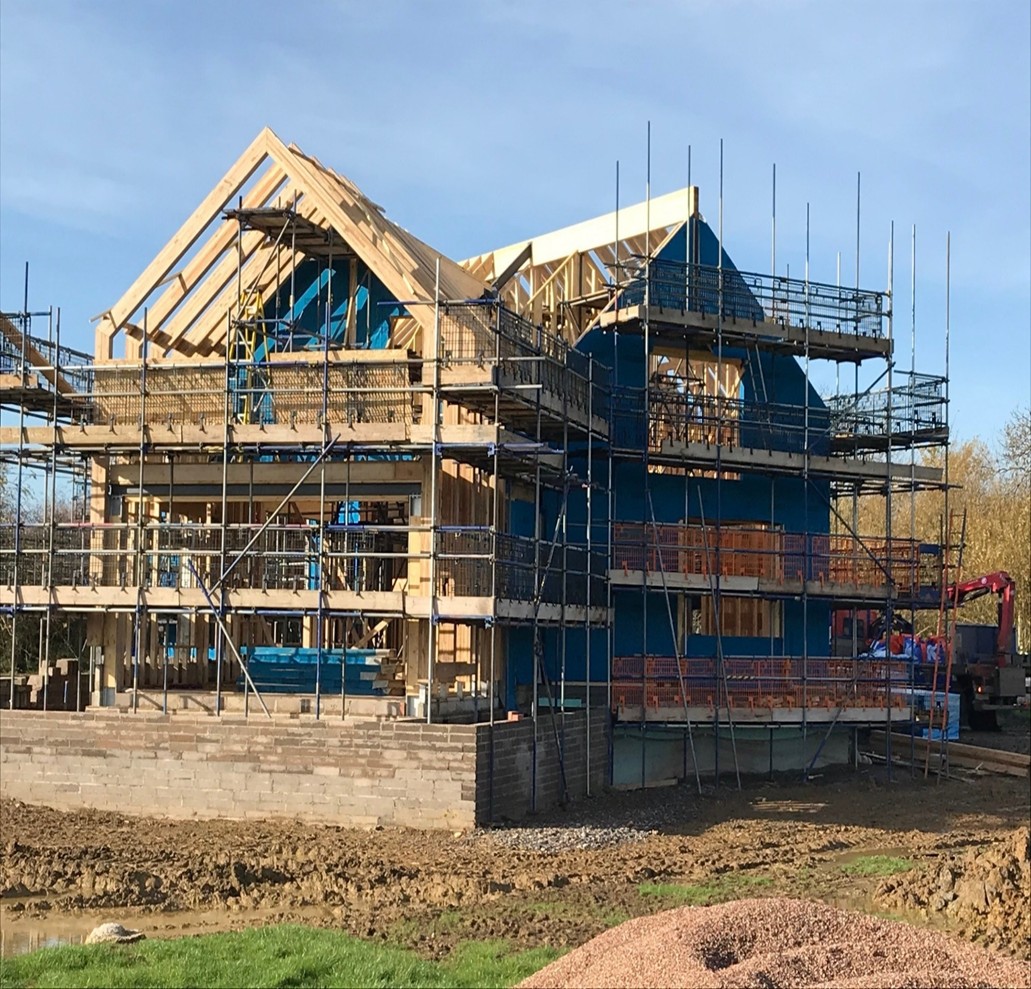
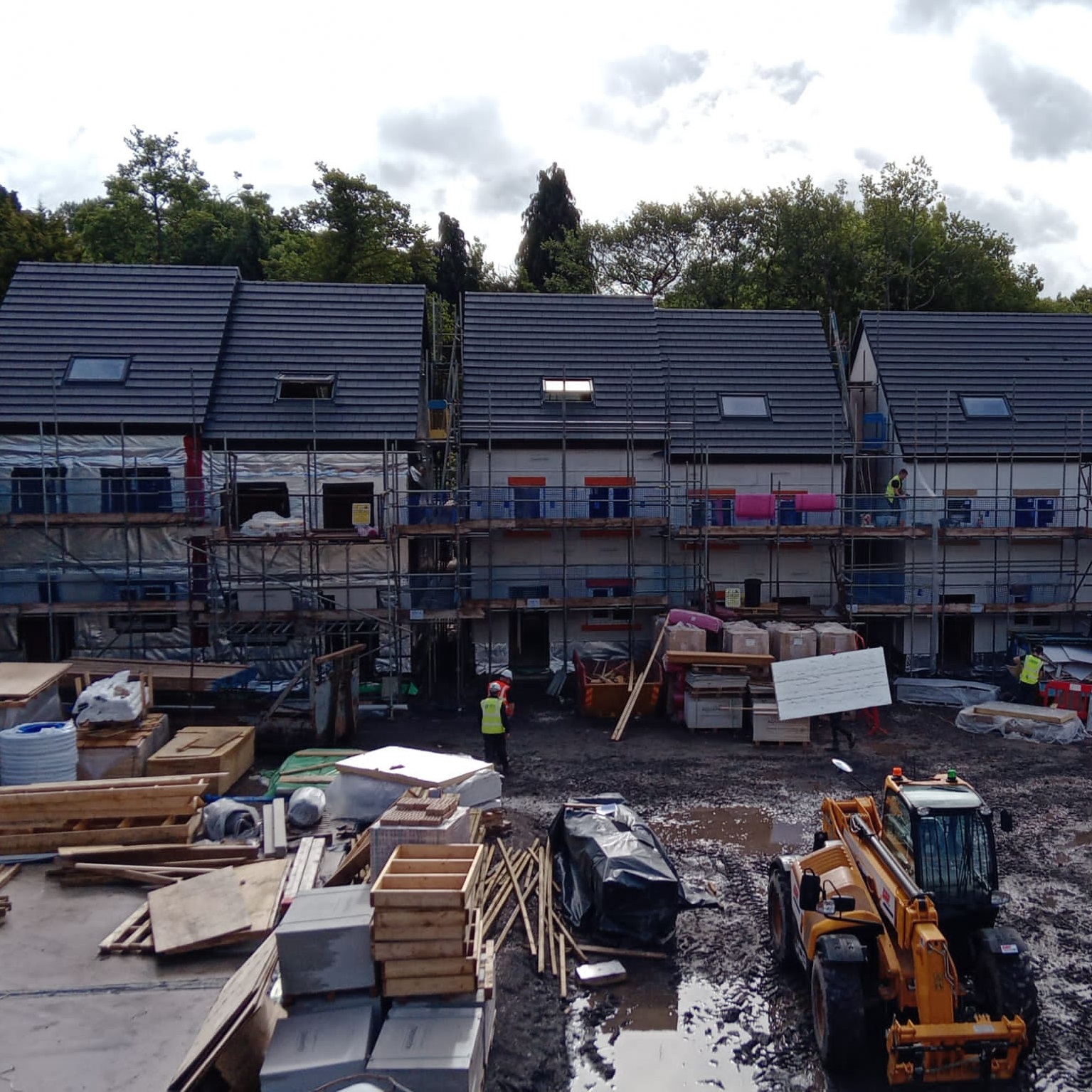
Timber frame is playing an increasingly significant role in new builds as housebuilders look to meet the expected requirements of the Future Homes Standard (yet to be published). You can see it wherever you’re passing a new development – finished bases surrounded by house-shaped scaffolds ready for panel delivery.
We all know that the organic and renewable nature of timber means that timber frames tick a lot of boxes when it comes to sustainability. The Future Homes Hub has shown they slash upfront carbon intensity by 16%, and manufacturing and designing them also generates less waste.
Sandeep Channa, Head of Timber Frame at Scotts Timber Engineering, talks about the benefits.
“It’s a lighter method of build, which requires less concrete and foundation,” says Sandeep. “Reducing the need for concrete, one of the highest carbon-intense construction materials, has got to be a good thing.” Another advantage of timber frame is that it acts as a carbon sink, locking in carbon, and is, says Channa, proven to be one of the least harmful products in terms of CO²emissions, compared to rival alternatives such as bricks and light steel frame, which are manufactured via heavy industry.
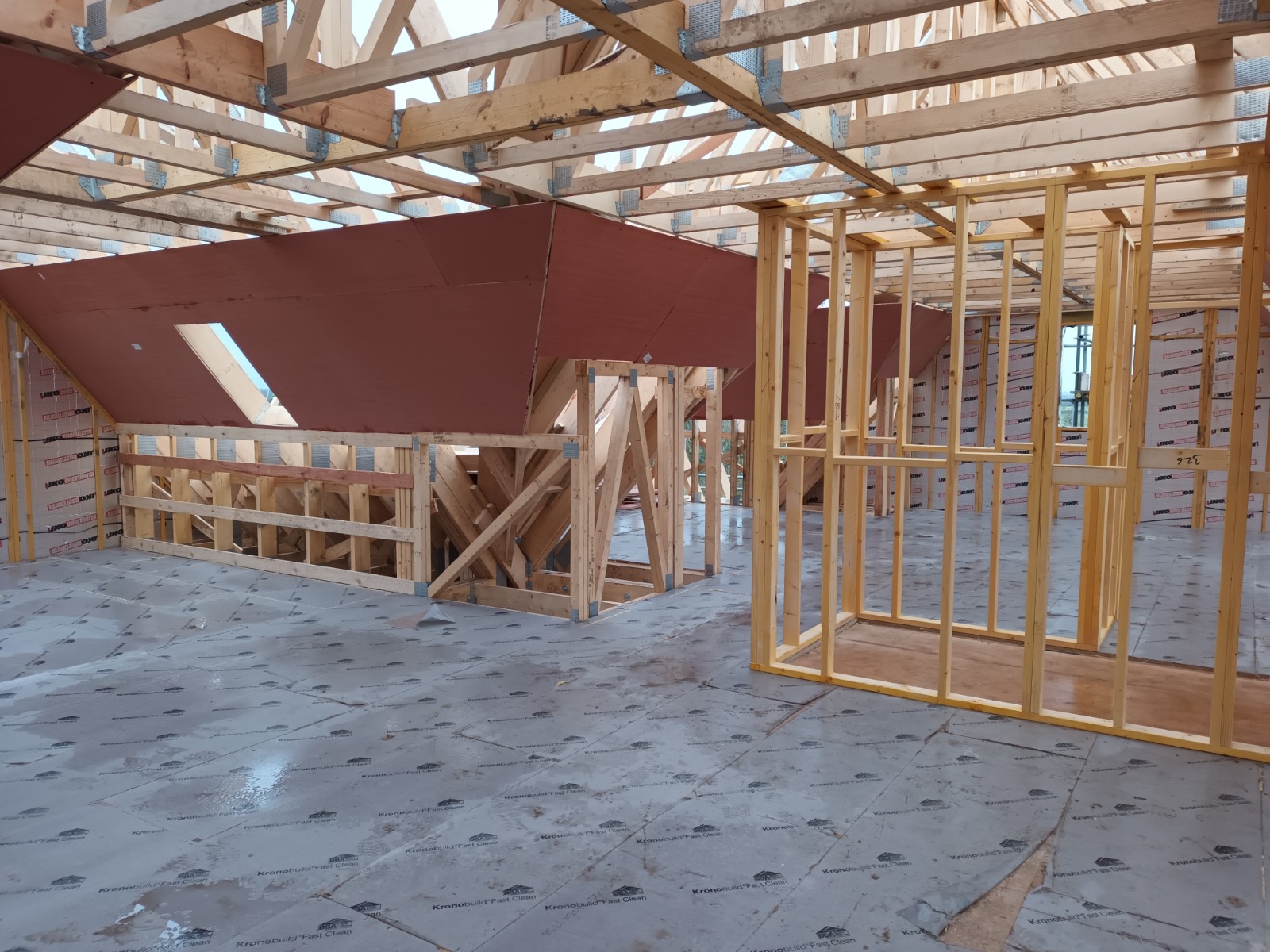
Moving on to construction speed, timber frame builds are made off site and assembled quickly on delivery. This reduces time on site and helps speed up the build programme.
And finally, because timber frame is precision-made in a factory under strict quality control measures, there’s less material waste and more consistent quality.
Timber frame as a modern method of build is not exactly new but it’s starting to make real inroads in England for the first time (having been the main method of construction in Scotland for decades). Scotts is focused on quality at every stage of the process.
If you have timber frame project or development of any scale you’d like to talk to our team about, call us today on 01832 732366 or email thrapston@scottste.co.uk.